There's already been lots written about this, but it's astounding how much these SoftBank funds will effect the startup ecosystem for years to come.
After years of VC's talking about how too much money is floating around creating over-priced unicorns, Masayoshi Son is going to end up injecting a trillion more dollars into the private market.
Employees need to start demanding that their employers create regular buyback/secondary programs to make up for the restrictions on their illiquid stock. It should be a straight forward part of the performance review process: "Here's some more stock, here's some more salary, how much of your existing stock (eg. up to 10%) would you like to sell in the next buyback?"
Companies like Slack are never going to go public in this sort of environment and its the employees that suffer the most. The public not being able to participate in startup gains is a legitimate issue, but they're not the ones creating the value in these companies.
> Companies like Slack are never going to go public in this sort of environment and its the employees that suffer the most.
I agree with your premise. The solution is for the private companies to do what all other long-term sustainable private companies have done throughout history: actually earn a profit. In doing so, they can pay dividends and or profit sharing to employees, buy back employee stock (optionally eg if someone wants to leave), and so on. Will that happen? Most of these companies will probably just keep riding the private capital train with things as they are for as long as they can.
They should be following the example of the SAS Institute, which has been private for 41 years and implemented employee profit sharing after their first year in business.
Long term sustainable? You should look at the turnover in the S&P 500 the last couple of decades. Some of the most valuable companies in the world (Google, FB, Amazon) explicitly eschewed short term profitability in order to maximize growth and share. Your cheap Uber rides speak to this phenomenon today.
If you're waiting for ambitious tech companies to prioritize turning a profit in order to provide some liquidity to their workers, good luck.
Don't put goog and FB in the same category as amzn. FB and Goog have generated a ton of profits. Goog retained earnings is 105B, FB is 22B. Amzn is 5B.
I was not familiar with the term "Retained Earnings" – it seems equivalent to "Shareholder Equity" (minus dividends), which is what I had learned in school.
Essentially, GOOG has accumulated $105bn of profit in its lifetime which that has yet to be dispersed to shareholders or invested.
You'd have to think them quite bearish on most currently available opportunities, or quite bullish on not-yet-investable opportunities, or otherwise incapable of effectively deploying capital (eg; due to insufficient human capital). Unless there's something I'm missing.
Yeah, you're missing the US tax code, which means that if there were trying to withdraw or reinvest the profits from overseas, they becompe taxable at corporate tax rate. Much cheaper to borrow more money by issuing bonds etc.
Interesting. Why is AMZN's retained earnings so low then? Do they not make much revenue overseas? Do they struggle to raise bonds at low rates? Are they simply able to deploy tax strategies unavailable to GOOG/FB?
Amazon's operating expenses are significantly larger than Google/FB.
THis means they've never earned a significant amount of cash net of operating expenses
They've also dumped a ton of money into capex, even still I don't think Amazon has ever gotten close to the retained earnings of any of the other four companies.
It's right there in Bezos shareholder letter, the same one he's published every year since 1997. They haven't killed Walmart yet so they have to keep spending to catch up on infrastructure. Google and FB have a comparatively lower need for infrastructure.
"actually earn a profit. In doing so, they can pay dividends and or profit sharing to employees,"
Paying dividends and buying back stock is generally not a good option for fast growing companies.
The inclination will always to be invest in the economic growth.
Payouts are for when your investors can get a better return on on that money than the company can.
When companies are growing, it's almost always a better economic deal to 'keep the money in the company'.
IE individual employees may make a 7-10% return on their tied up stocks, but only 5% on the market. So financially, you can see how it makes sense for companies to keep the money - even though, any individual employee would rather 'cash out and diversify' ... it doesn't get to work that way.
I think that employees selling shares to new investors, even if there are no new shares created is an idea that might work.
Also - sadly - so many startup employees are not savvy enough to figure any of it out. So they get a raw deal.
The notion that fast growth doesn't or shouldn't go with profitability (which can then be distributed), is a recent premise (post mid 1990s), made possible only by bubbling private capital markets (and the dotcom bubble before it).
In terms of fast, are we talking 100% annual growth? 50%? 20%? SAS is not fast growing for example compared to recent Facebook performance. Things have turned out extremely well for them. They've routinely been regarded as one of the top places in the US to work, which without question has helped them attract higher caliber employees. No public stock necessary, no need to drown in red ink for artificially fast growth.
Would you rather work at SAS for 30 years earning a lucrative profit share (their CEO has talked about routinely signing off on 15 and 30 year awards for employment longevity among employees), or risk working for FireEye or Splunk or Box for seven years until they run out of money and are forced into an acquisition as they run the growth & negative profit model into an inevitable wall?
Ultimately it's a choice, as to what a company decides to focus more heavily on. It can also be portioned, you don't have to give up all growth for profit sharing.
To use one outsized example, Facebook staying private and implementing a profit sharing arrangement with its employees and shareholders in 2011, would have been a vastly superior deal for most of the people involved. They'll hit ~$16b in net income this year. They could nearly make every one of their employees a millionaire in one year, in 2018, via profit sharing.
Most of these private companies will not remain particularly fast growing for very long, not more than 5-10 years tops. You can see a lot of these now-public red ink machines still blowing their brains out with this failed business approach (growth over profit), while their growth slow dramatically and the red ink continues. Eg: Box, Splunk, Workday, FireEye.
It's the same business model mistake Twitter made. They could have been radically profitable, instead they mistakenly focused on growing the size (bloat) of the company. In the end, they remain unprofitable, and the grow slows to nothing. Then what? Forced sale, forced firings, etc.
"Ultimately it's a choice, as to what a company decides to focus more heavily on."
I think you are conflating two issues.
If any company were growing at more than 50% a year - there would probably not be much in the way of 'profit share' because it would be a really bad move. Those profits should almost assuredly be 're-invested' in the growth of the company.
The 'profit share to employees' issue is really about a fundamentally different way to incentivize staff than other means.
" Facebook staying private and implementing a profit sharing arrangement with its employees and shareholders in 2011, would have been a vastly superior deal for most of the people involved. They'll hit ~$16b in net income this year. They could nearly make every one of their employees a millionaire in one year, in 2018, via profit sharing."
No - there is absolutely no reason that FB should be handing out 'a million dollars in profit' to each employee? Why on earth would it do that? It doesn't have to. Every company will pay more or less market wages.
If you owned FB, why on earth would you want managers to be paying people 10x what they need to?
FB private/public thing doesn't matter.
If they stayed private, they'd have to compensate in 'rev share' something roughly along the lines of the value of the stock options they handed out.
"They could have been radically profitable, instead they mistakenly focused on growing the size (bloat) of the company"
???
You're contradicting yourself here. The 'bloat' you're talking about is payment to employees. So you're saying they should have paid people less?
Yes - I agree - they could have been profitable a long time ago, but they are 'not profitable' precisely because they are giving away too much 'revenue share' in the form of 'salary' to too many people.
Those are separate concerns and entangling them is counterproductive. As an employee and shareholder of a fast-growing company, I might very well think that the best thing for the company is to eschew profits and invest in growth. Yet I could also simultaneously desire liquidity in some of my shares (for example, to buy a house).
> unless it becomes a market standard and employees demand it.
There doesn't need to be a market standard, employees just need to unionize.
Remember, unions don't need to interfere with salaries or working conditions in any other way. And in fact union agreements in tech would likely be super minimal and focus on only a handful of issues, since for the most part the market already offers reasonable salaries and benefits.
There is already work happening to unionize some of the biggest tech companies, I think it's actually going to happen because it's a huge win/win for both the employees and employers. Employees get fair equity agreements and the right to own their side projects, and employers get a reduced cost of hiring because unions can take on part of the burden of vetting candidates and making sure they can follow security practices.
> There is already work happening to unionize some of the biggest tech companies, I think it's actually going to happen because it's a huge win/win for both the employees and employers. Employees get fair equity agreements and the right to own their side projects, and employers get a reduced cost of hiring because unions can take on part of the burden of vetting candidates and making sure they can follow security practices.
I don't think these big companies lose a lot in hiring, although onsite interviews really can suck up a lot of money every year. But for the biggest companies on this planet, they can write off that item like dropping a ten-dollar bill out of a million dollar (if we were to scale down from billions).
If this is a win-win, then employers would not mind making salary transparent and work on pay equality. Companies generally don't want union because that's like dealing with your political constituents as politicians, except union has the power to shut down a company's operation overnight. Imagine Google is in danger of shut down because the whole company goes on a strike? Google has to agree and Google will always have its throat tied. I really doubt these big SV companies would want a union, ever. I can probably say, well, Google can learn from a strike and have a disaster protocl for the most extreme case: what if half of the planet goes missing and half of the Googlers are gone after a nuke or after a deadly contagious virus killing half of the population?!? That would be a very good disaster protocol to develop.
I am not really being sarcastic. In the age of global conflict and more viruses and bacteria becoming immune to existing medication, perhaps we should ponder one whenever we have a five-minute break. HK (where I was from) was in terror and "lock-down" mode in 2003 during the SARS disease. More than 1750 people died in HK. HK had one of best trained medical workforce and system in the world at the time, yet, HK was surprised and hit so hard we ran out of supplies and medical personnel. Just for the record, SARS also spread to the rest of the world with some causality. So we are not prepared. Another example: NYC's MTA union strike in 2005?2006? made pretty much half of the city, if not, most of the city public transportation went in sleep mode with very minimum service. It definitely wasn't fun walking 5 miles to school, and then another 5 miles back. Finally, look at hurricane disasters this year.
Sorry for going tangent, but there is a control the top wants to put on the workers, so there is no surprise. Dictatorial governments don't want surprise so they lock oppositions up, and give the "good" citizens something nice to keep them from getting too angry. So for these SV companies, actually, any companies, they will give some raise, give out "generous" benefits, to keep most of their employees "happy". Is it worth it to get $150,000 salary for staying late (and continue to work after going home)? Of course not. But many engineers do anyway because they don't want to lose anything that comes with this job, especially if they are not ready to move to another job yet, which is probably many months later (or years later) for so busy with work and whatever remaining time for family.
My stand on this, as a worker, is union is a hard sell to SV, but I see the benefits of having a union. It takes a lot of people, and it can happen, but not a win-win like you stated. So nah, not so optimistic.
Also what kind of security practice? Safe coding? "We are going to have a threshold on number of security bugs"? Bugs are inevitable. I am not sure how one can create ANY deals out of that. Can you clarify?
US pension funds together are worth $22 trillion. This is 61% of global pension funds and much much larger than the Saudi funds. They should invest a small part into Vision Funds and other VCs!
I heard that a16z did something similar when they started - they were willing to pay a significant premium because 1) they had more conviction in their bets and 2) to win deals/access when starting off.
Softbank is just doing this on steroids, and we'll see what happens. Though I am glad that this much capital is at least being directed to high growth tech companies creating things (rather than being used for financial engineering like MBS/CDOs)
This is getting downvoted, but it’s a big piece of the puzzle. 60% of the Vision Fund is Saudi and Emirati money [1]. Political risk is real. The line between “Saudi backed” and “venture backed” can be night and day for some companies.
Imagine how people would react today to a start-up like Facebook (circa 2009) taking the Russian VC money that they did (Digital Sky, Yuri Milner, Alisher Usmanov). It would be unfeasible for Facebook to do so, politically the firestorm would threaten to burn their company down, as Congress would go ballistic over the perceived implications.
Perhaps I'm underestimating the significance of this, but honestly, does anyone really care in a hyperconnected global world? To me, as long as the parties you are raising money from act as good shareholders, I don't really see a massive problem. There are too many conspiracy stories going around..
You are underestimating the significance of this. The economic security of the US rests to a significant extent on the fact that there's far more fundamental innovation going on here than anywhere else in the world. Whoever pays for it, ends up owning it, which is not a problem if the innovation in question is just some inconsequential bullshit like a business model. It becomes a problem when it's something that is a force multiplier: AI, hardware, big data, etc. You don't want to let the Middle Eastern hereditary theocratic dictatorships to play with any of this stuff, or own large chunks of the US innovation sector. You also don't want Communist China to play with it either, but I guess it's too late for that now.
Sure. Empires rarely survive past the 250 year mark. It’s remarkably consistent. The US will be 250 years old in 2026, though it hasn’t been an empire for the entire duration. Make of it what you will.
Of course! They invaded Crimea so we’ve imposed economic sanctions. Also seems to be evidence of them influencing the election. These things weren’t clear at the time.
Interesting you mention crimea and election influencing in the same post. There is a level of geo political games going on which are not in the best interests of civilians in any nation. We're long past the point of no return. The only hope is that through interconnectedness it becomes undesirable to wage war as to do so means attacking yourself. From that perspective we should encourage more investments from sources outside of our borders, especially those of our 'enemies' and we should be doing the same in foreign territories.
There's plenty of evidence that they conducted a massive, highly sophisticated propaganda/cyber warfare campaign. It's impossible to prove that it did or didn't tilt the election, but it clearly could have given the extremely thin margins in key states. I'd say that counts as influence.
Present some then. Thus far the best that I’ve seen is $100k in FB ads to peddle the divisive topics typically peddled by the democratic establishment.
This is not what I’d call hard evidence. This is testimony, by people whose careers depend on saying there was interference. Fact of the matter is, around this time last year the same outlets you link here (except cspan) we’re projecting that Trump had a 7% chance of winning the election. In the presence of “interference”, the odds would probably be different. It’s only when the anointed heir to the throne didn’t win that anyone started talking about “interference”.
No, I mean documented, actual evidence either presented as-is, or at least reviewed first hand by a neutral, trusted third party. Not some kooky WaPo bullshit.
What counts as a neutral, trusted third party. With respect to this issue, does the US intelligence community count? If so, then does the second link, a link to the report meet your standards of evidence?
If not, then I'm not sure what kind of third party you are imagining. What would be the intelligence community's reason to coordinate and issue false statements on this?
Can you elaborate how big the effective political risk is? I always thought LP commitments are pretty binding - are there many ways out of the fund for Saudi/Emirati money that aren't available to other very big fish?
> Can you elaborate how big the effective political risk is? I always thought LP commitments are pretty binding
The risk isn’t the Saudis pull out. It’s that their investment brings adverse attention from the President, the Congress, aspiring Senators and advocacy groups. A foreign state investor is scarier to most Americans than a foreign private entity.
Is there any info on what sort of returns Softbank is getting? Or on what basis investors think that sinking so much money into this fund is a good idea?
I can't talk about too much, but we do quite a bit with softbank[1], and I live in Japan working with HQ.
The bets they are making are actually pretty predictable, they are all more "sure" wins. Many of these companies will not exit for a long time.
They are making some (in my opinion) questionable bets on more early stage companies though. If the bets are < 100 million, some of these are more traditional R&D bets that might not give proper returns.
Of note here is that "softbank" is actually a massive investment fund though. There are multiple sources of money, not just 1 "vision" fund. Even the way the decision making is done is pretty fragmented.
I am just wondering - people say there is no bubble until there is news of irrational exuberance. Bubbles like 2001/08 etc. I am no VC but doesn't this sound like the irrational exuberance?
I won't deny we're in a unique situation right now. Being one of the beneficiaries of there being a bubble, I won't deny I'm biased here.
That being said, this is a bit of an interesting situation because we are largely seeing an alternative set of vehicles that aren't silicon valley funding tech innovation outside of silicon valley as well as in.
Our personal situation, we are seeing larger innovation outside the valley than in in terms of both AI publishing (China) and alternative use cases. I won't try to predict when a bubble will pop, but there are both tons of capital right now as well as tons of naysayers looking for the chance to say "any minute now" and look to be right.
I really can't say yes or no on whether we will see this pop or just evolve over time. You will see articles online both saying "any minute now" and "the bubble will continue".
I'm not sure to what degree we are in a bubble as much as we are seeing money shift outside the valley.
Correct me if I am wrong but the point you are trying to make is - This is unique because it is alternative funding schemes for tech but it might not be as bad because money is going/coming from outside the valley?
As you say in your other posts - they are making predictable "sure" wins while some, in your opinion, are questionable specially in early stage companies. So that begs question - Do they have enough "sure" wins to bet the house worth 880 billion? Or they might be used to fund the questionable early stage companies? If it's latter, then they might end up creating a bubble.
Right on first point. Considering they are ranging the investment from public markets (nvidia) to large scale private investments like uber, I'd say they're banking on a ton of these companies going public long term to make the ROI worth it.
As for some of these questionable bets, I think the goal there is the traditional unicorn moon shot type return where 1 of those investments will return the whole "pool of smaller investments". I wouldn't be surprised if they put the funding in to pools and divide up the risk like that.
In general, I wouldn't be surprised if they invest in more public companies if they run out of late stage private bets to make.
As for whether they create a bubble, you might be right. Like I said, I can't/won't try to comment on whether it's a bubble or not. It's just strange because we have a large foreign entity making large scale private bets in the valley as well as abroad.
Enough easy money is pouring in that cash comp is equal to what you'd get at a large non-Big Tech (Google/Amazon/Fbook/Msoft/etc) company. The lottery ticket is just an add-on.


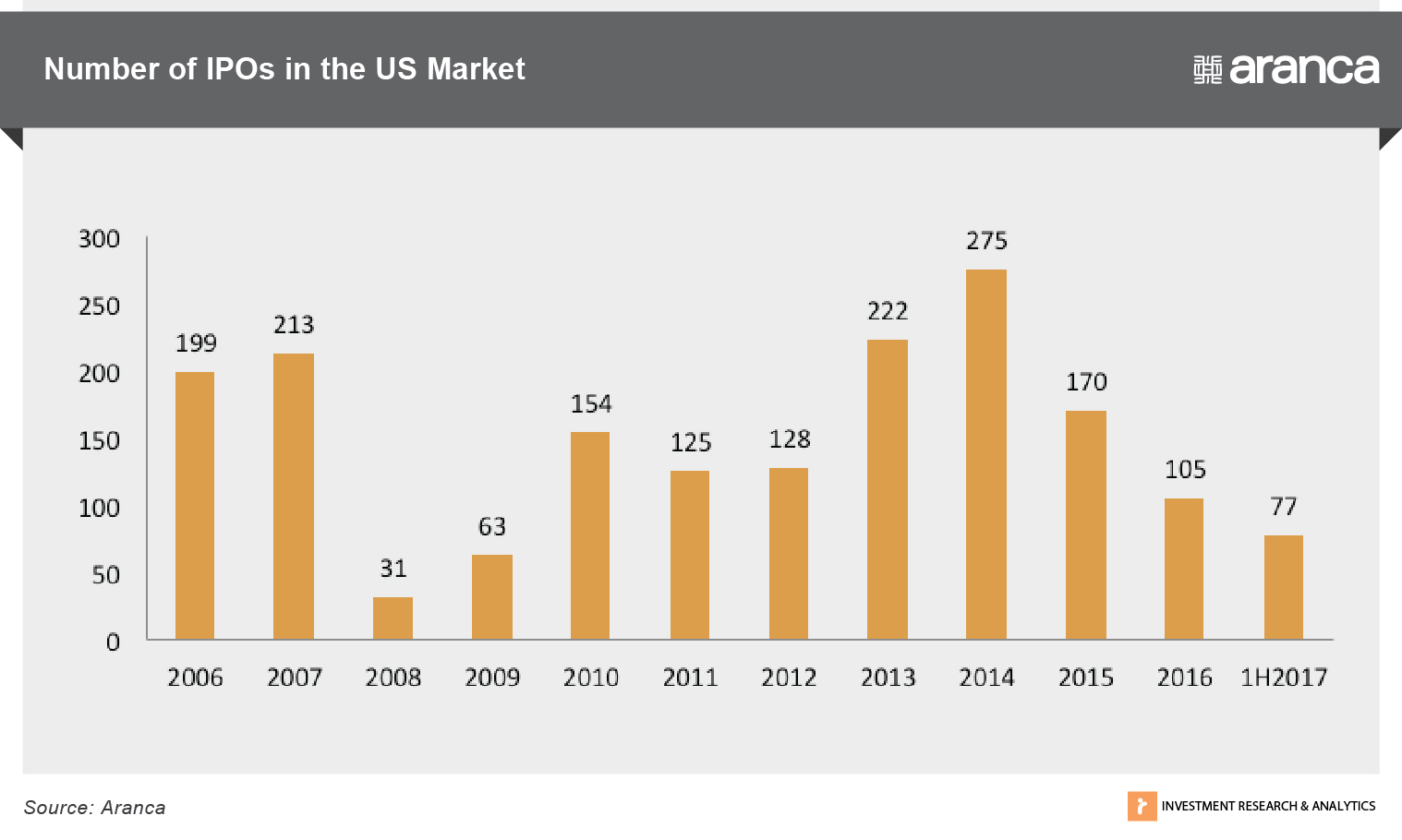
After years of VC's talking about how too much money is floating around creating over-priced unicorns, Masayoshi Son is going to end up injecting a trillion more dollars into the private market.
Employees need to start demanding that their employers create regular buyback/secondary programs to make up for the restrictions on their illiquid stock. It should be a straight forward part of the performance review process: "Here's some more stock, here's some more salary, how much of your existing stock (eg. up to 10%) would you like to sell in the next buyback?"
Companies like Slack are never going to go public in this sort of environment and its the employees that suffer the most. The public not being able to participate in startup gains is a legitimate issue, but they're not the ones creating the value in these companies.